
 When you’re starting to drown between employee concerns, payroll duties and helping your CEO -- HR Insider is there to help get the logistical work out of the way.

Across Canada, non-union salary increases in 2013 are projected to average 3 percent. However, The Conference Board of Canada finds notable geographical differences, which it attributes to uneven economic growth, and has, accordingly, revised its annual salary projections by region.
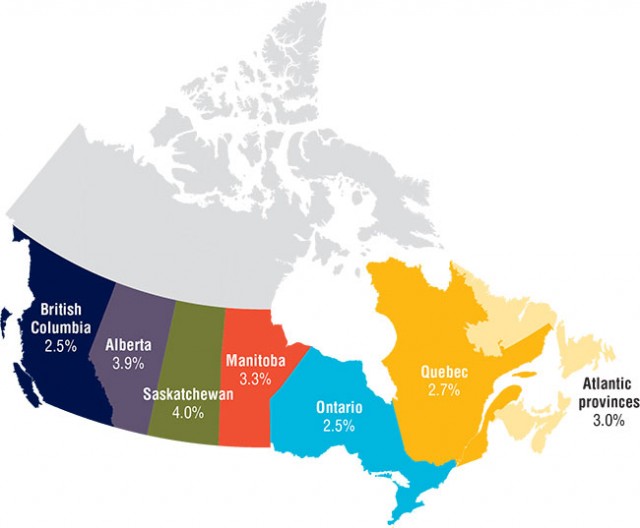
Salary growth projections have been revised upwards in Saskatchewan (4 percent) and Alberta (3.9 percent), while projections for Quebec (2.7 percent), Ontario (2.5 percent), and British Columbia (2.5 percent) have been revised downward and remain below the national average of 3 percent.
In reviewing salary gains, The Conference Board of Canada also finds the oil and gas industry, the industry with Canada’s highest average salary increases, outpacing earlier projections. The oil and gas sector now projects increases at 4.5 percent, up from 4.2 percent last fall.
“Salaries in oil and gas this year are rising slightly faster than we projected, and labour markets in western Canada are tightening. We have heard from natural resources firms that virtually all of them are having trouble finding the skilled workers they need,” said Ian Cullwick, Vice-President, Leadership and Human Resources Research for The Conference Board of Canada, when releasing the new data.

