The Hidden Cost of Skills Shortages: How HR Can Lead Internal Reskilling Rather Than Relying on External Hire

Canadian organizations are facing a talent crunch that feels more like a slow, grinding pressure than a sudden crisis. Job postings stay open for months. Hiring managers grow frustrated. Recruiters keep widening their search radius. HR teams burn hours screening, interviewing, and negotiating, only to learn that the ideal candidate accepted a competing offer at the last minute.
The problem is not that employers are suddenly bad at hiring. The problem is that Canada's skills pipeline no longer keeps up with business demands. Immigration helps, but it does not fully close the gap. Post-secondary programs produce talent, but not fast enough for industries undergoing rapid technological shifts. Even when candidates exist, competition is fierce.
This has pushed many employers to look inward and reconsider something they already know but rarely prioritize. The people they need tomorrow might be the people they already have today, if they invest in reskilling.
HR leaders are discovering that the most reliable way to address chronic skills shortages is not to fight over the same small pool of external candidates. It is to build a system that helps existing employees grow into new roles, adapt to new technologies, and transition into areas where the organization lacks depth.
This is internal reskilling, and it is quietly becoming one of the most important HR strategies in Canada.
Why Skills Shortages Are Hitting Canadian Employers Harder Than Expected
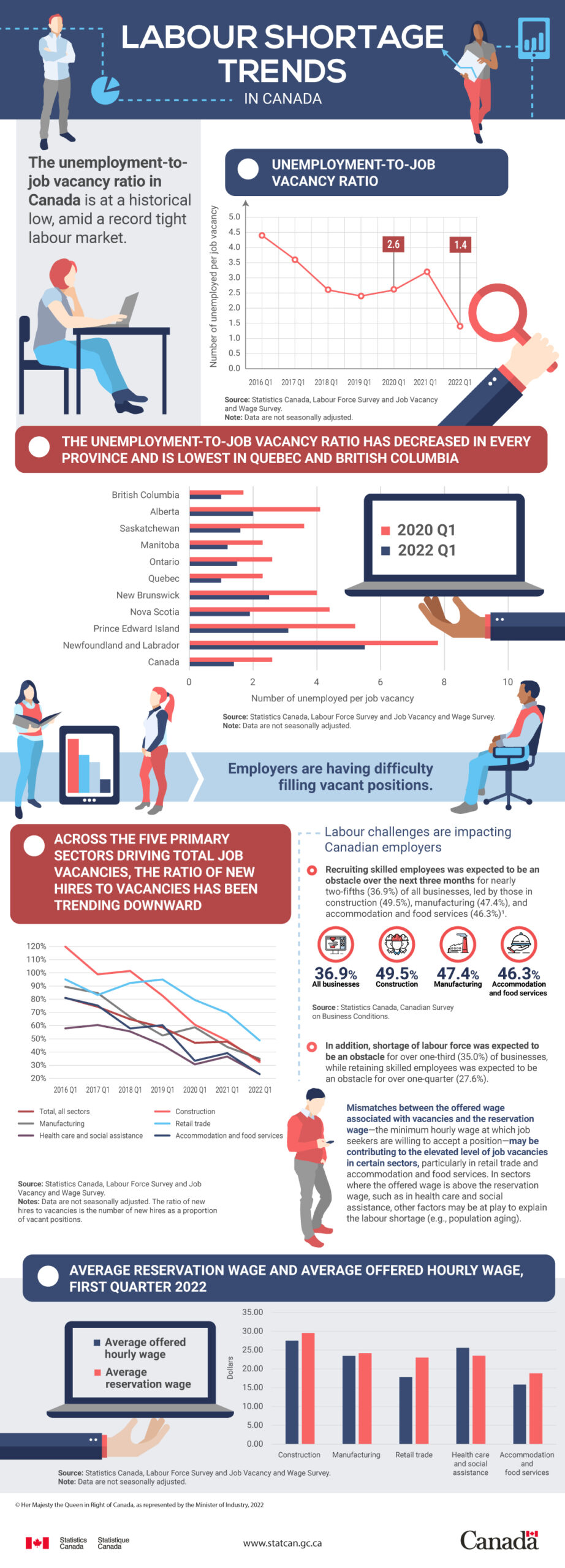
Skills shortages are not new, but their economic impact is growing. A 2023 Canadian Chamber of Commerce report estimated that skills shortages cost the Canadian economy tens of billions of dollars annually in lost productivity. Forty percent of businesses reported they could not take on new work because they lacked people with the right abilities. Sectors like construction, healthcare, tech, transportation, and advanced manufacturing were hit hardest, but no industry was immune.
Compounding the issue is the reality that the pace of change has accelerated. Automation, AI, cybersecurity, data analytics, regulatory shifts, and new digital platforms are reshaping job requirements faster than traditional hiring cycles can keep up. By the time an external candidate is found, trained, and onboarded, the role may have already changed again.
Many HR teams have noticed another trend. External candidates often negotiate higher salaries because the market is tight. Internal employees, who already know the culture and systems, are often paid significantly less. Over time, this creates wage compression, morale issues, and retention problems.
Skills shortages are not just about a lack of talent. They are about the rising financial and cultural cost of relying too heavily on external recruiting.
The Hidden Cost of External Hiring
Externally hiring someone with specialized skills carries more costs than the salary alone. HR leaders know this, but many executives do not see the full picture. Several expenses remain hidden in budget lines rather than showing up as a single, visible cost.
Recruitment time and money
Job boards, agency fees, assessments, recruiter time, and manager interviews all consume resources. The average cost per hire in Canada is approximately four thousand dollars, and that number increases sharply for technical roles.
Longer onboarding time
New hires may be skilled but still need months to understand internal systems, client nuances, culture, and decision-making processes. According to HRPA data, the average time to full productivity can be six to twelve months.
Turnover risk
The tight labour market means external hires are more likely to leave within the first eighteen months. If they do, the cycle starts again.
Inflationary pressure on salaries
Paying a premium for external candidates can create internal inequities. Employees who have been loyal for years may feel undervalued when newcomers earn significantly more.
Lost knowledge
Hiring externally instead of reskilling internally means you lose institutional memory, which is often more valuable than any technical skill.
When HR teams present these costs to leadership, something becomes clear. Growing talent internally is not just a retention strategy. It is a cost control strategy.
Why Internal Reskilling Works Better Than External Hiring
Internal reskilling offers advantages that external hiring simply cannot match. When employees move into new roles through intentional development pathways, the organization gains agility, loyalty, and long-term sustainability.
Employees already understand the culture
They know the expectations, the unwritten rules, and the organizational rhythm. This reduces friction and speeds up learning.
Reskilled employees stay longer
Study after study shows that employees who receive career development opportunities have dramatically higher retention. A LinkedIn Workforce Learning Report found that 94% of employees would stay longer if companies invested in their learning.
Performance improves because confidence improves
Employees who grow into new skills feel trusted. That trust translates into engagement and ownership. They see their advancement as a shared investment.
Workforce planning becomes more stable
When HR builds a pipeline from within, gaps are predictable. Succession planning becomes more than a chart. It becomes a process.
Reskilling reduces wage compression
Instead of paying market premiums for external hires, employers can design transparent growth paths. Internal employees earn more because they develop, not because the market forces a sudden jump.
Diversity improves
Relying on external hiring often reproduces the same patterns. Investing in internal development gives underrepresented employees real access to advancement.
Internal reskilling is not cheaper because it is a shortcut. It is cheaper because it is smarter.
A Story HR Managers Know Well: The Overlooked Employee Who Could Have Filled the Role
Here is a familiar scenario. A mid-sized Canadian employer spends three months searching for a cybersecurity analyst. They interview eight candidates, negotiate offers, raise the salary range twice, and finally find someone who accepts, only to back out a week before the start date.
During that time, an internal network technician named Michael kept quietly raising his hand. He had been taking free online cybersecurity courses for six months. He had already completed a foundational certificate. He was eager to grow but was told the company needed "someone with experience."
After the external candidate withdraws, HR revisits Michael. Within four weeks, he steps into the role with support, mentorship, and a structured learning pathway. A year later, he is performing at a high level.
This happens in every industry. The talent you need may already be sitting inside your organization.
Why Reskilling Is Not the Same as Upskilling
These terms get used interchangeably, but the distinction matters.
- Upskilling improves skills within the same role.
- Reskilling helps employees shift into new roles entirely.
Upskilling keeps people relevant. Reskilling moves people into areas where shortages are most severe. HR managers need both, but reskilling is where the real strategy lies. It transforms your workforce from static to adaptable.
How HR Can Build a Reskilling Strategy That Works
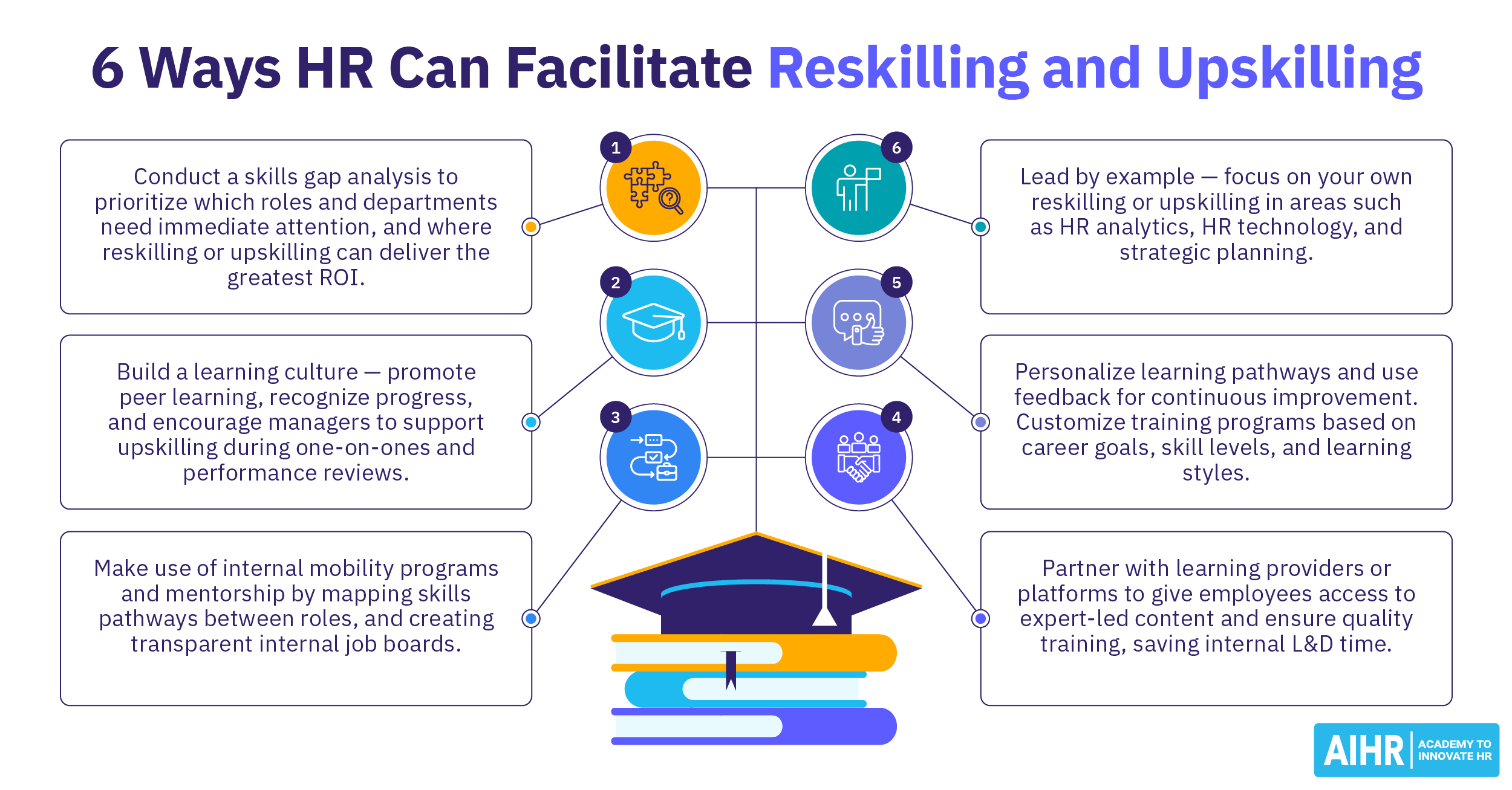
Building an internal reskilling system does not require a massive budget. It requires structure, intention, and clear communication.
- Start by mapping your skills gaps
Most organizations know the roles they struggle to fill, but they do not always know why. HR should work with managers to identify the exact competencies missing. If your organization lacks data analysts, break down the specific skills required. If you struggle with frontline supervisors, identify the leadership capabilities missing.
- Look inward before posting externally
Before writing a job posting, ask one simple question. Do we already have employees who can be trained into this role? HR teams can create a formal internal application process or invite employees to express interest in reskilling pathways.
- Build learning pathways that are clear and achievable
Employees need to know what success requires. A pathway might include online courses, mentorship, job shadowing, certifications, and stretch assignments. The structure should be transparent and realistic.
- Partner with external training providers
Many SMEs assume reskilling requires building everything internally. It does not. Colleges, universities, and online learning platforms offer affordable microcredentials that align with high-demand roles.
- Create a culture that celebrates lateral movement
Reskilling sometimes means employees move sideways before they move up. HR can change the value perception by sharing success stories and recognizing employees who take the initiative.
- Support managers so they do not hoard talent
Some managers fear losing strong performers to other departments. HR needs to set expectations that internal mobility is not optional. It is a strategic advantage.
- Track outcomes and show the ROI
Executives respond to results. HR can track metrics such as reduced vacancy time, cost savings, lower turnover, or productivity gains. When leadership sees the data, reskilling becomes a permanent strategy, not a one-off project.
Where Canadian Legislation Supports Reskilling
Several Canadian public policy trends align with the push for internal development.
- The federal government has expanded funding for upskilling and reskilling programs under the Workforce Development Agreements.
- Many provinces offer training grants such as the Canada Ontario Job Grant or Alberta Jobs Now Program.
- EI-funded training supports allow employees to upgrade skills while maintaining income support.
- Provincial apprenticeship programs are increasingly open to mid-career workers, not just younger employees.
HR teams can leverage these programs to offset training costs.
The Emotional Side of Reskilling: Employees Want a Future
Reskilling is not solely a business strategy. It is a morale strategy. When employees see their employer investing in their growth rather than replacing them, they feel valued on a personal level.
One employee described it this way after transitioning from warehouse operations into logistics planning:
"It felt like the first time the company saw what I could become instead of what I already was."
That kind of connection is impossible to create through external hiring.
HR Is the Strategic Engine Behind Internal Reskilling
Skills shortages are not disappearing. External hiring will always have a place, but it cannot be the foundation of a long-term strategy. Canadian organizations need to build the skills they lack, not just buy them from the market.
HR is uniquely positioned to lead this shift. By designing learning pathways, supporting internal mobility, championing development, and bringing clarity to workforce planning, HR can transform the talent model from reactive to proactive.
Reskilling is not just a solution to shortages. It is a powerful way to strengthen culture, reduce turnover, and build a resilient workforce that grows alongside the organization.